

4.9 out of 5.0 stars on Amazon"Upon finding that I work as a professional bonsai artist, many people will remark that they once had a bonsai, but it died and with some regret, they gave up". Based on the Bonsai Basics section of the hugely successful Bonsai4me.com website and an e-book of the same name, 'Bonsai Basics: The Foundations of Bonsai', written and developed over the past 15 years is out now! All copies are signed by the author. |
Page 2 of 2:
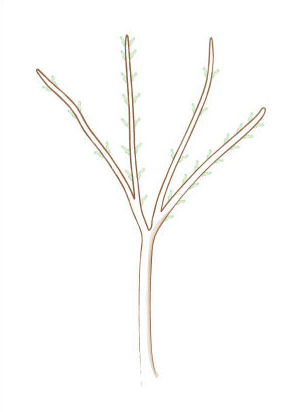
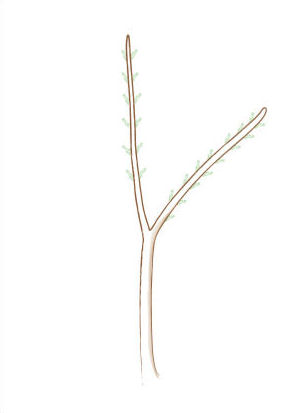
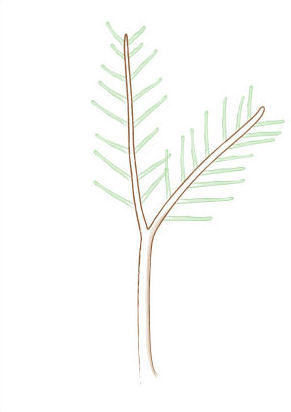
Whilst pruning, if you have a choice of shoots or branches to remove, always try to prune back those with the longer internodes. This will help achieve good foliage density in the future.
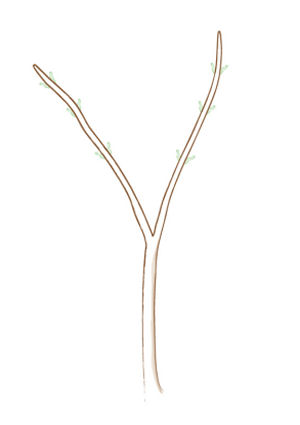
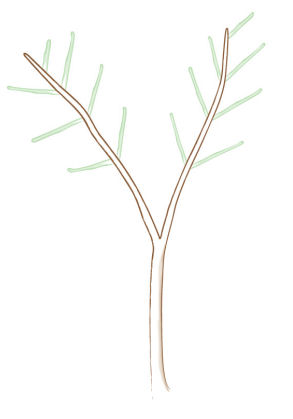
Keeping the shoots with longer internodes will lead to sparser foliage in the future.
The occurrence
of long internodes increases when an Acer is especially vigorous
and/or has a reduced number of buds through which to direct it's
energy; for instance, after trunk chopping or hard pruning.
One method of combating long internodes is by using what I term
as a 'sap drawer'
Using a Sapdrawer
The occurrence
of long internodes increases when an Acer is especially vigorous
and/or has a reduced number of buds through which to direct it's
energy; for instance, after trunk chopping or hard pruning.
One method of combating long internodes is by using what I term
as a 'sap drawer'.
Again, this is a technique that can be applied to many deciduous tree species but is especially useful for all Acer species (Trident, Field as well as Japanese Maples).
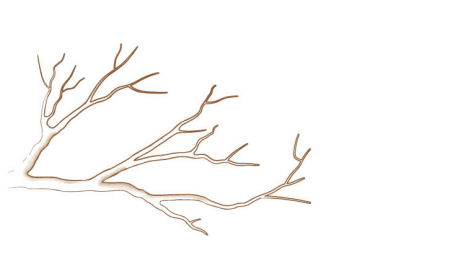
After budbreak, pinch all apical buds with the exception of one that will become the sapdrawer.
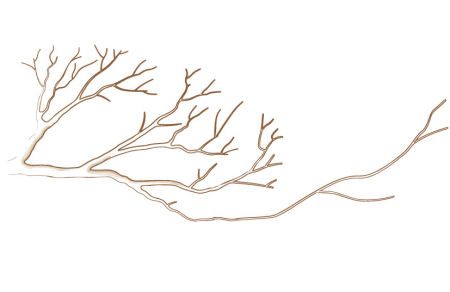
The sapdrawer will be used to 'soak up' the excess energy of the tree and protect the other branches from developing long internodes.
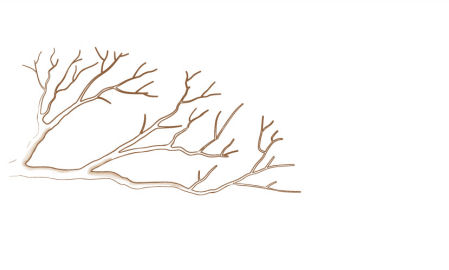
When the first flush of growth slows after budbreak (in Spring,
after budbreak or to a lesser extent, after defoliation) the sap
drawer can be removed. The sapdrawer can be left and allowed to
grow for an extended time to help thicken the whole branch if
necessary.
Positioning Acer palmatum
It is always
recommended that Acer palmatum be protected from the Sun and Wind
as the leaves are liable to sun and wind scorch. However this
advice is more applicable to the US, Australia and similar climates,
in the UK, my experience of Acer palmatum is that strong, well
rooted and healthy Japanese maple bonsai can be kept in full Summer
sun. Good light conditions ensure smaller leaf size, better backbudding,
denser foliage with stronger autumn colours.
Specimens with weak or reduced root systems due to poor soil conditions
or having been recently root pruned will have difficulty supplying
enough moisture to the leaves in strong winds or bright sunlight
and leaf scorch WILL occur. These trees should be afforded a more
sheltered position outside. If you are unsure of the vigour of
your Acer palmatum bonsai or the effect of your climate on this
species, err on the side of caution and provide protection against
the sun and wind in Summer.
All images in this article by Ninoslav Pirš